Some blades earn a following. The bowie knife tiger tooth is one of them. With its striking striped finish and heavy, purposeful build, it sits at the crossroads of frontier heritage and modern collecting culture. Whether you first spotted one in a trading market, a display case, or a game inventory, the appeal is hard to ignore.
This guide breaks down what makes the tiger tooth bowie knife special. You’ll learn its design roots, how to read condition grades like FN and minimal wear, and how to choose one worth owning. If you take knives seriously, this is the deep dive you’ve been looking for.
What Is a Bowie Knife Tiger Tooth?
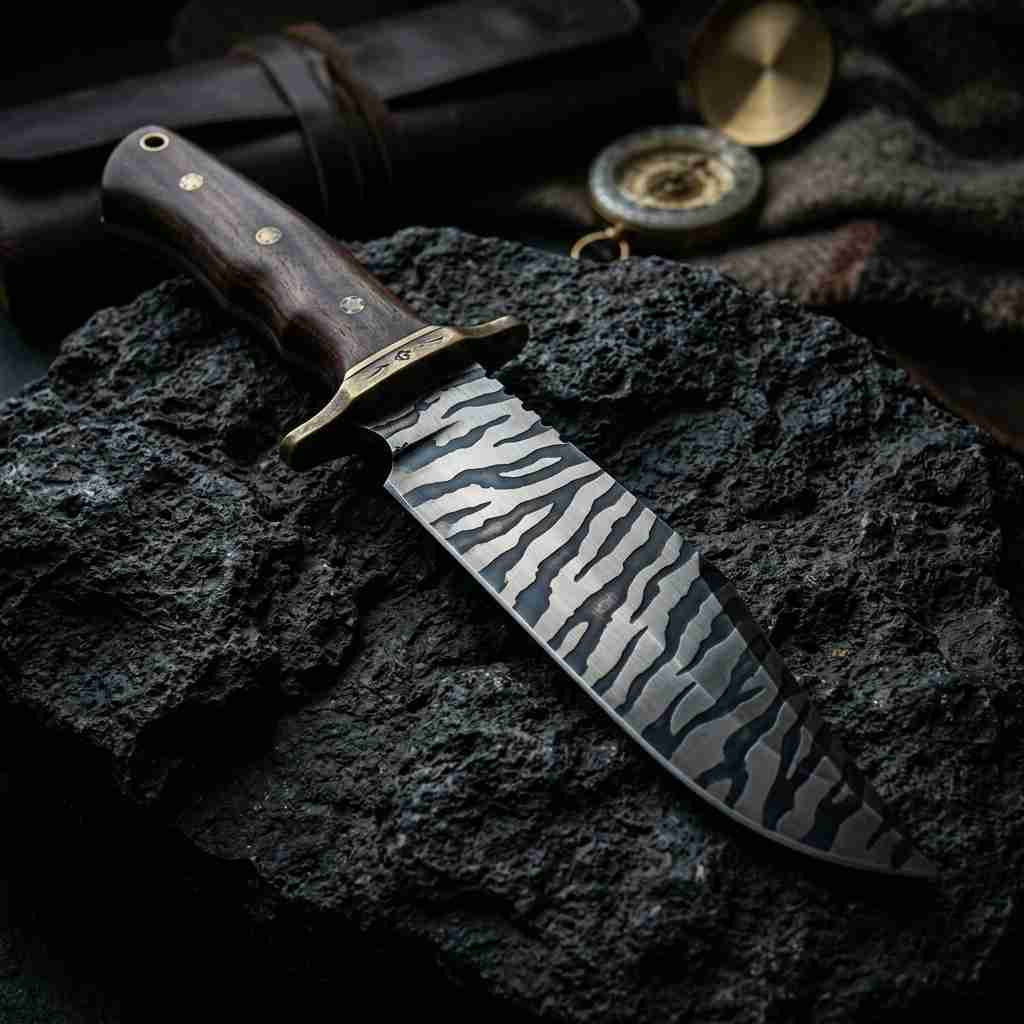
A bowie knife tiger tooth is a large fixed-blade knife finished with a distinctive tiger-stripe pattern along the blade. The base shape follows the classic bowie profile: a long clip-point blade, a defined guard, and a substantial handle built for a firm grip. What sets this version apart is the surface treatment, which gives the steel a banded, tiger-like look.
The term covers two overlapping worlds. In the physical knife market, “tiger tooth” refers to the striped acid-etched or coated finish craftsmen apply to bowie blades. In gaming and digital trading communities, the bowie knife tiger tooth is a prized skin variant with the same visual identity. Both share the same core traits: bold pattern, aggressive silhouette, and strong collector demand.
At its heart, this is still a bowie knife. It carries the same design DNA that made the pattern famous nearly two centuries ago. The tiger tooth finish simply adds a layer of visual character that turns a working tool into a statement piece.
History and Lore Behind the Bowie Knife
To understand the tiger tooth, you first need to understand the bowie itself. The bowie knife traces back to the early 1800s and is tied to the legend of Jim Bowie, an American frontiersman whose name became linked to the large fighting knife he carried. After the famous Sandbar Fight of 1827, demand for “a knife like Bowie’s” spread fast across the frontier.
Early bowies were forged by blacksmiths who prioritized strength and reach. The clip-point tip allowed for finer control, while the deep belly of the blade handled heavy chopping and skinning. Over decades, the design settled into the recognizable form we know today.
The tiger tooth finish is a much newer chapter. It reflects a modern desire to personalize a historic pattern without losing its identity. If you want the full backstory of how these blades evolved from frontier tools into collectible icons, our deep dive into bowie knife lore traces the pattern from Jim Bowie’s era to the present day.
Tiger Tooth Design Features
The tiger tooth finish is the headline, but the whole knife works together. Here’s what defines the look and feel.
The Tiger Stripe Finish
The signature element is the banded pattern running across the blade. Craftsmen create it through acid etching, controlled heat treatment, or specialized coatings that reveal alternating tones in the steel. The result mimics the stripes of a tiger, hence the name. No two etched blades are identical, which adds to the appeal for collectors who value uniqueness.
Blade Shape and Steel
The blade keeps the traditional bowie clip-point. This gives you a sharp, controllable tip and a broad cutting edge. Quality tiger tooth bowie knife builds use high-carbon or stainless steel, balancing edge retention with durability. A well-made blade holds its finish and its sharpness through regular handling.
Guard and Handle
A solid crossguard protects the hand and anchors the bowie’s fighting heritage. Handles range from stacked leather and hardwood to synthetic materials like Micarta. The best examples pair a comfortable grip with balance that makes the knife feel alive in the hand rather than blade-heavy or awkward.
Overall Balance
A good bowie should feel purposeful. The weight sits where it helps, the guard keeps your hand secure, and the finish catches light without feeling gaudy. When these elements come together, you get a knife that performs as well as it displays.
Condition Guide: FN vs Minimal Wear
Condition drives value more than almost anything else. Two grades come up constantly: FN and minimal wear. Understanding them helps you buy smart and avoid overpaying.
Factory New (FN)
The bowie knife tiger tooth fn grade means the piece is essentially flawless. The tiger stripe pattern shows crisp, sharp contrast. The edge is clean, the guard is unmarked, and the handle shows no signs of use. For collectors, an FN example is the gold standard. It commands the highest prices because the finish sits exactly as intended, with no fading or scuffs to break the pattern.
When you’re chasing an FN piece, inspect the striping closely. The bands should look defined and even. Any blur or thinning in the pattern usually signals a lower grade being sold as top tier.
Minimal Wear
A bowie knife tiger tooth minimal wear example shows light, honest signs of handling. You might see faint surface marks, slight softening of the finish edges, or minor contact wear on high points. The tiger stripe is still clearly visible and attractive, just not pristine.
Minimal wear pieces offer strong value. You get the same striking look at a friendlier price, and light wear rarely affects performance. For collectors who want to display and occasionally handle their knives, minimal wear often hits the sweet spot between condition and cost.
Reading Condition Honestly
Always judge condition in good light. Photos can hide or exaggerate flaws. Look at the striping contrast, the edge line, the guard, and the handle separately. A knife described as minimal wear should never show deep scratches, rust, or heavy fading. If it does, the grade is wrong.
Why Collectors Love the Tiger Tooth Bowie Knife
The appeal runs deeper than looks. Here’s what keeps this pattern in demand.
- Visual identity. The tiger stripe is instantly recognizable and stands out in any collection.
- Heritage. It carries the weight of bowie history while feeling modern and distinct.
- Uniqueness. Etched finishes vary slightly between pieces, so each blade feels one of a kind.
- Value stability. Well-kept examples, especially FN grades, tend to hold their worth over time.
- Display power. Few knives look as good mounted or cased as a clean tiger tooth bowie.
For enthusiasts, owning one is part investment, part passion. It’s a piece you show off and a piece you respect.
How to Choose Your Bowie Knife Tiger Tooth
Buying well comes down to a few clear priorities. Work through these before you commit.
Set Your Purpose
Decide whether you want a display piece, a user, or a long-term collectible. An FN example suits pure collectors. A minimal wear piece works well if you plan to handle it. Knowing your goal narrows the search fast.
Inspect the Finish
The tiger stripe is the whole point. Look for sharp, even banding with good contrast. Weak or uneven striping lowers both appeal and value, regardless of the stated grade.
Check the Steel and Build
Ask about the steel type and hardness. Confirm the guard is tight and the handle is secure with no play. A quality build outlasts a purely cosmetic one every time.
Match Condition to Budget
FN commands a premium. Minimal wear saves money while keeping the look. Set a budget, then choose the best condition within it rather than stretching for a grade you don’t need.
Buy From a Trusted Source
Reputation matters. A reliable seller grades honestly, describes flaws openly, and stands behind the piece. Browse a curated bowie knives collection to compare finishes, builds, and condition grades side by side before you decide.
Frequently Asked Questions
What is a tiger tooth bowie knife?
It’s a large fixed-blade bowie knife finished with a tiger-stripe pattern along the blade. The striped look comes from acid etching, heat treatment, or coating, giving the steel a banded, tiger-like appearance while keeping the classic bowie shape.
What’s the difference between bowie knife tiger tooth fn and minimal wear?
FN, or factory new, means the knife is flawless with crisp, high-contrast striping and no signs of use. Minimal wear means light, honest handling marks and slightly softened finish edges, while the tiger stripe stays clearly visible. FN costs more; minimal wear offers better value.
What is the price range for a tiger tooth bowie knife?
Prices vary widely based on steel quality, craftsmanship, and condition. Entry-level pieces sit at the lower end, while FN examples from skilled makers command a premium. Minimal wear pieces usually fall between the two, offering strong value for the look.
Is the bowie knife tiger tooth a good collectible?
Yes. Its bold finish, bowie heritage, and slight variation between pieces make it highly collectible. Well-kept examples, especially FN grades, tend to hold their value and stand out in any display.
How do I care for a tiger tooth bowie knife?
Keep the blade clean and dry to protect both the edge and the finish. Wipe it down after handling, apply a light coat of oil to guard against rust, and store it in a dry place. Avoid abrasive cleaners that can dull the tiger stripe pattern.
Does light wear affect performance?
No. Minimal wear affects appearance far more than function. Light surface marks or slight finish softening rarely change how the knife cuts or handles, which is why minimal wear pieces are popular with hands-on collectors.
How can I tell if the tiger stripe finish is genuine?
Look for even, well-defined banding with natural contrast in the steel. Authentic etched finishes show subtle variation and depth. Flat, printed-looking patterns or blurry striping often signal lower quality or misgrading.
Final Thoughts
The bowie knife tiger tooth blends frontier heritage with a finish that turns heads. Its striped blade, classic clip-point shape, and strong collector demand make it a standout in any knife lineup. Whether you chase a flawless FN example or a value-focused minimal wear piece, understanding design and condition puts you in control of a smart purchase.
Ready to find yours? Explore our full range of bowie knives, compare finishes and condition grades, and add a tiger tooth bowie knife to your collection with confidence. Your next standout blade is waiting.